
Refrigerant Dryers
How Refrigerant Drying Works
A refrigerant dryer cools compressed air to a temperature where water vapor condenses into liquid. The liquid water is separated from the air and drained away. The dried air then warms back up, which helps prevent condensation in downstream piping.
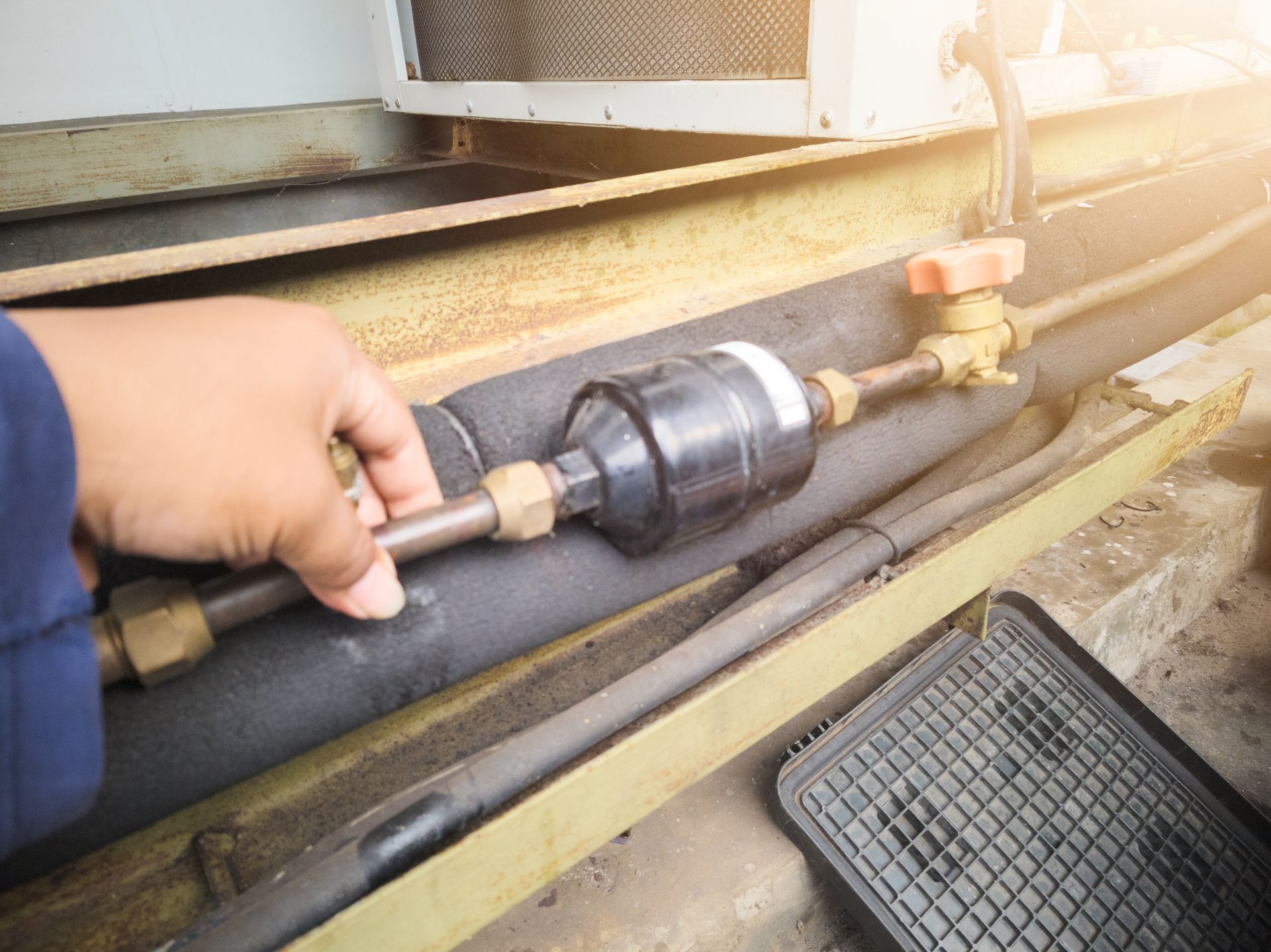
Ideal Applications
Refrigerant dryers are a practical choice for many industrial air systems. They work well when the air needs moisture control but does not need the very low dew point of a desiccant system. They are common in plants, shops, and light industrial facilities.
Benefits of Refrigerant Drying
Refrigerant dryers are simple to operate and are often a cost-effective choice for general moisture control. They reduce moisture in pipes, which lowers corrosion and protects air tools and instruments. Drier air also helps keep equipment performing well.
Installation Tips
Install the dryer where the air is cool and the space has good airflow. Place a particulate filter upstream to remove oil and dirt that could foul the heat exchanger. Keep the condensate drain clear and check it regularly.
Keeping Air Dry Year-Round
Refrigerant dryers need routine service to keep working well. Clean the condenser, check refrigerant levels, inspect drains, and confirm temperatures. Regular checks help prevent unexpected downtime, especially during hot Texas summers.
Request a Quote
Our team can help you choose the right refrigerant dryer size for your system. Contact us to discuss your airflow, pressure, and site conditions.
Signs Your Refrigerant Dryer Needs Attention
Rising outlet temperature, water in downstream lines, a drain that does not clear, or a dryer that runs continuously can all point to a problem. Early service is usually simpler and less costly than repairing damage caused by moisture in the system.
Pre-Filtration Matters
Oil and dirt can reduce heat transfer in a refrigerant dryer and cause scale or fouling. Installing a particulate filter and, where needed, a coalescing filter upstream helps protect the dryer and keeps performance steady.
Sizing Questions We Ask
We size refrigerant dryers using your flow rate, inlet temperature and pressure, and the dew point you need. Planning for future expansion now can save the cost of replacing an undersized dryer later.
Ambient Temperature and Performance
Refrigerant dryers depend on cooling the air. High ambient temperatures and poor airflow around the unit can reduce performance. Keeping the area clear, providing ventilation, and cleaning the condenser help the dryer hold its dew point during hot months.
Choosing Between Desiccant and Refrigerant Drying
Refrigerant dryers are a strong choice for general moisture control. Desiccant dryers may be better when very dry air is required. Our team will walk through your dew point target, budget, and site conditions before recommending a solution.
Keep a simple log of dew point readings, pressure, and drain checks. Trends in these numbers often reveal a problem weeks before a dryer stops performing, which gives you time to plan service instead of reacting to an outage.
Need reliable moisture control for your air system? Call (432) 563-1376 to get a refrigerant dryer quote.