
Desiccant Vent Dryers
How Desiccant Drying Works
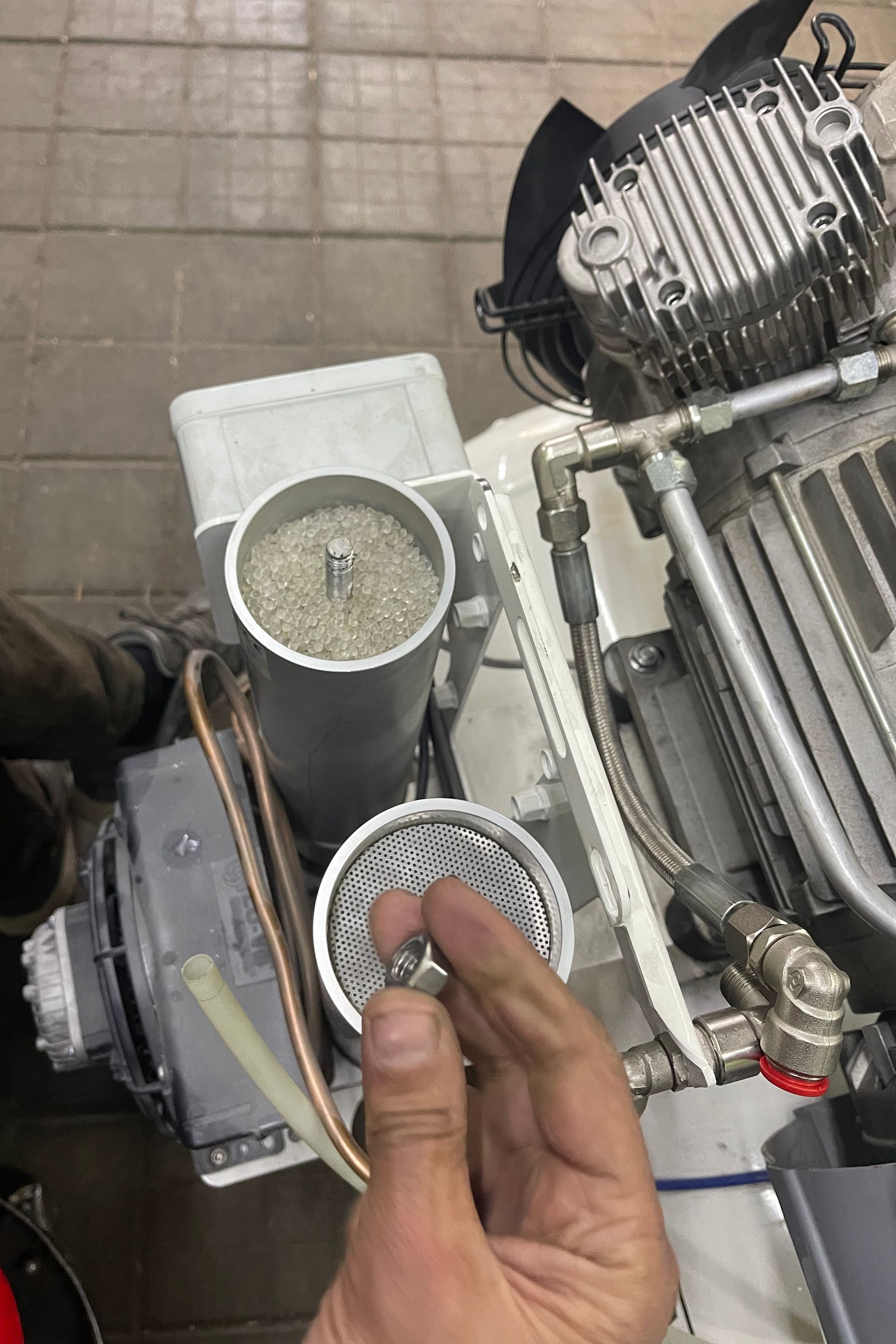
A desiccant vent dryer removes moisture from compressed air using a drying material called desiccant. As moist air passes through the desiccant, water vapor is absorbed. The dryer switches between towers so one tower can dry air while the other is renewed.
Regeneration and Venting
To renew the desiccant, the dryer uses a small amount of dry air to remove the captured moisture. This regeneration air is vented to the atmosphere. This is why these units are called vent dryers. Venting keeps the design simple and avoids the need for a separate drain system.
Where Desiccant Vent Dryers Are Used
Desiccant vent dryers are often used in instrument air systems and oilfield applications. Very dry air protects control valves, instruments, and pneumatic devices from freezing and corrosion. They are a good fit when dew point control matters.
Benefits of Desiccant Drying
These dryers can reach low dew points, which helps protect sensitive equipment. They work without refrigeration, which can be an advantage at remote or demanding sites where very dry air is required.
Installation and Maintenance
Proper installation includes correct sizing, a clean and dry air supply, and a filter upstream to protect the desiccant. Regular maintenance includes checking the switching cycle, replacing worn parts, and replacing desiccant when it no longer dries air effectively.
Work with Our Team
Accel Compression can help you select, install, and service a desiccant vent dryer. Our skilled staff can review your air system and recommend the right size. We come to you, and after-hours support is available for urgent needs.
Signs a Desiccant Dryer Needs Service
Watch for dew point readings that rise above your target, moisture in downstream instruments, unusual noise from the switching valves, or a dryer that cycles too often. Any of these signs can mean the desiccant is worn, the valves need service, or the filter upstream is clogged.
Pre-Filtration Matters
Oil, dirt, and liquid water can coat desiccant and shorten its life. A coalescing filter and a particulate filter placed ahead of the dryer protect the drying media and help the dryer perform as designed.
Sizing Questions We Ask
To size a desiccant vent dryer, we look at your compressor output, operating pressure, required dew point, and ambient temperature. We also ask about peak demand and future growth so the dryer will not become a bottleneck later.
Environmental and Site Considerations
Because regeneration air is vented, site layout matters. The vent should be placed safely, away from air intakes and people, and it should follow local rules and your facility's guidelines. Our team can help you plan the vent location as part of the installation.
Choosing Between Desiccant and Refrigerant Drying
A desiccant vent dryer is often selected when very low dew points are needed. A refrigerant dryer may be a better fit when moderate moisture control is enough. We will compare both options with you and explain the tradeoffs so you can choose with confidence.
Want dry, reliable instrument air? Call (432) 563-1376 to request a desiccant vent dryer quote.